
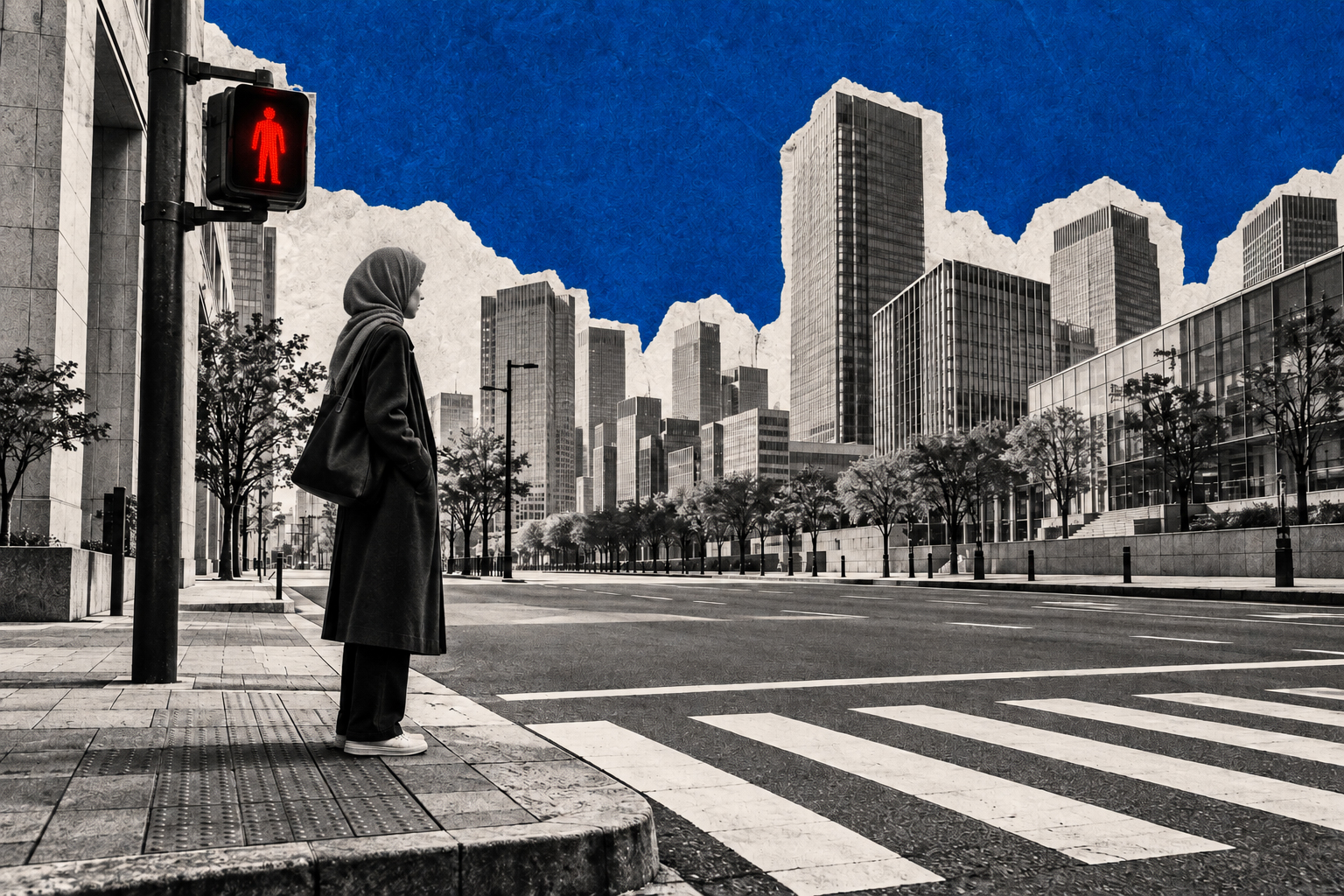




We often use the words “intellectual” and “civilized” as though they were synonymous. We assume that someone with an academic degree is an intellectual, that a person who reads extensively is civilized, and that a society with universities, modern roads, and technology is necessarily a civilized society. Yet everyday experience reveals that the matter is more complex. A person may possess extensive knowledge, know the names of philosophers, and read history and literature, yet be unable to tolerate an opinion that differs from his own, refuse to respect other people’s place in a queue, and resort to personal connections when the law conflicts with his interests. By contrast, we may encounter someone with limited formal education who respects those who are different, protects public property, accepts freedom of opinion and belief, and does not violate the rights of others. Here lies the distinction between culture and civility, and between the intellectual and the civilized person.
Culture, in its scholarly meaning, is broader than reading and education. In his 1871 book Primitive Culture, Edward Tylor defined it as that “complex whole” which includes knowledge, belief, art, morals, law, custom, and the habits acquired by human beings as members of society. UNESCO later broadened this understanding in the 1982 Mexico City Declaration on Cultural Policies, describing culture as the set of distinctive spiritual, material, intellectual, and emotional features of a society, encompassing ways of life, value systems, traditions, and beliefs. Customs and traditions are therefore an essential part of culture, but they do not constitute culture in its entirety.
This leads to an important point: not every culture represents civilization, and not everything inherited by a society deserves to survive. Culture describes what a society carries within it, including what is beautiful and ugly, just and unjust, tolerant and intolerant. Revenge may be a cultural custom, favoritism may be an inherited social practice, and rejection of those who are different may form part of a prevailing culture. Declaring others unbelievers may itself be a culture among extremist groups, but the age of such practices does not transform them into civilized values.
Civilization, by contrast, is broader than individual behavior because it encompasses institutions, urban development, law, organization, knowledge, and technology. But when we move from “civilization” to “being civilized,” we reach the dimension that concerns us here: civilization means refining culture according to the requirements of civic life, so that respect for human beings, difference, law, and the public interest becomes part of everyday behavior. From this perspective, culture can be understood as the values, customs, and beliefs carried by society, while civility is the way in which that culture rises to a higher level by recognizing human dignity, freedom, and rights.
Freedom of opinion, religion, and belief; respect for others; acceptance of difference; equality before the law; and respect for privacy and public property therefore become fundamental indicators of civilized conduct. A society that allows you to exist only if you resemble it is not practicing tolerance; tolerance begins when you are different from it. Respecting freedom of belief does not mean that I must believe what you believe, but that I recognize your right to hold that belief. Respecting freedom of opinion does not mean that I must like your opinion, but that I acknowledge your right to express it within limits that do not violate the rights of others.
In this context, it is impossible to overlook Dr. Ali al-Wardi, who made the “conflict between Bedouinism and civilization” one of his principal keys to understanding Iraqi society, alongside the duality of personality and social dissonance. The importance of his idea does not lie in drawing a superficial contrast between the desert dweller and the city dweller, but in drawing attention to the persistence of values even after the physical environment changes. A person may live in a modern city while his relationship with the state, the law, and other people continues to be governed by group solidarity, force, and kinship.
This is clearly visible in society. The city does not automatically create a civic-minded person. We can build a modern university while cheating remains socially acceptable, establish a modern court while some people continue to prefer tribal authority over the judiciary, and construct a wide modern road while drivers continue to disregard traffic rules. The result is that the physical structure has become modern, while behavior has not changed at the same pace.
Here, from a different perspective, al-Wardi’s thinking converges with that of Malek Bennabi. In The Conditions of the Renaissance, Bennabi effectively rejected reducing civilization to an accumulation of material objects and instead linked its construction to the human being, the soil, time, and the way these elements are directed. A society can purchase the products of civilization, but it cannot purchase civilized human beings along with them. The latest automobile can be imported, but respect for the road cannot be imported inside its trunk. A university can be built within a few years, but developing academic integrity and respect for reason requires a much longer process of social education.
For this reason, a distinction can be made between material civilization and value-based civility. The first appears in technology, urban development, and institutions. The second appears in the individual through the way he relates to the law, time, women, those who differ from him religiously and intellectually, and public property. The first may advance rapidly while the second lags behind for decades.
This brings us to the difference between the intellectual and the civilized person. The intellectual, in the sense intended here, is someone who has moved beyond merely accumulating information toward understanding, critical thinking, and expanding the horizons of the mind. The civilized person, by contrast, is someone for whom civic values have become a form of practice: someone who respects another human being not because of position, sect, or tribe, but simply because that person is human; who respects the law even when able to evade it; and who defends the rights of an opponent just as he would defend the rights of someone who agrees with him. The idea can therefore be summarized in one sentence:
“The intellectual is someone whose mind has been broadened by knowledge; the civilized person is someone whose behavior has been refined by values.”
A person may be an intellectual without being civilized: he may read about freedom yet be unable to tolerate the freedom of others, or speak about citizenship and then resort to favoritism and personal connections. Conversely, a person with little formal education may display civilized behavior by respecting order, rights, and difference. The more complete model, however, is the civilized intellectual: a broad mind combined with civic conduct.
The true test of civilized conduct does not come when the law is watching us, but when we are capable of violating it and choose not to do so; nor does it come when we deal with those who resemble us, but when we deal with those who are different from us. Civilization, therefore, is not measured solely by the number of towers and universities, but by the kind of human beings those towers and universities produce.
Material civilization can be imported, but civility cannot, because it is built within the human being. Culture may tell us what we have inherited, but civility tells us what we have succeeded in refining within that inheritance. Between the two lies the distance separating a society that possesses the instruments of civilization from one in which civilization inhabits the behavior of its people.


Comments